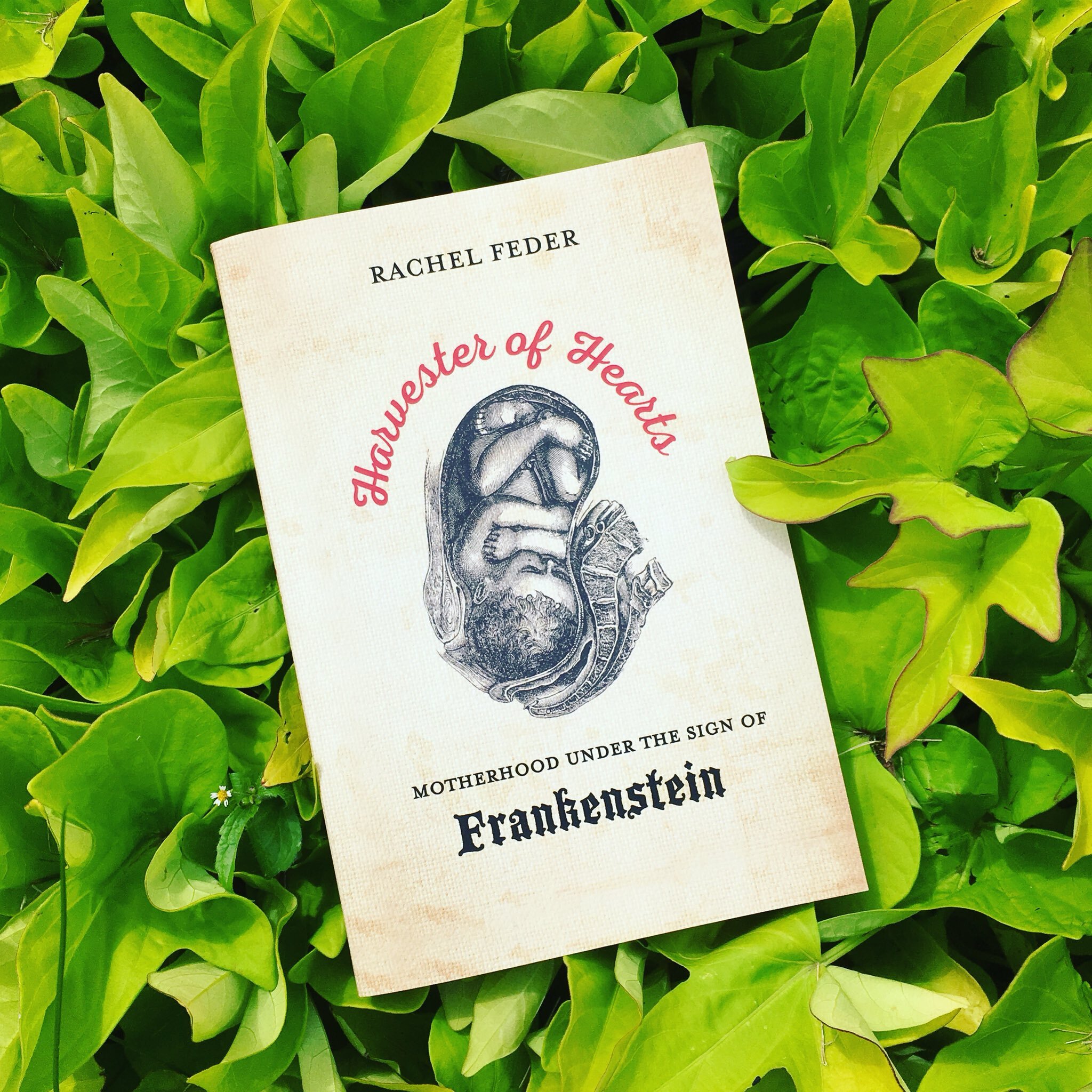
Harvester of Hearts
“Feder, well aware of literary-theoretical injunctions against bringing the mess of biography into critical matters, goes defiantly ahead and brings in both Shelley's life, not least as a mother, and her own.” —Times Literary Supplement
“Makes space for multiple ways of knowing, claiming all spaces as intellectual spaces.” —Deanna Koretsky, The Wordsworth Circle
“Reading Feder’s study made me uncomfortable, but such unease is not always, or necessarily, a negative emotion, since it often provokes questions, revealing a fault line of doubt—even a change of perspective—that suddenly opens up before those who experience it. Once I had reached the end of Harvester of Hearts […] my elusive opening question—’Who was Mary Shelley?’—had suddenly changed, correcting its alignment and configuration: not who was Mary Shelley—we will never know—but rather ‘who is Mary Shelley’s reader?’” —Francesca Saggini, European Romantic Review
Harvester of Hearts: Motherhood under the Sign of Frankenstein weaves experimental interpretations of Mary Shelley’s early fictions with meditations on topics ranging from twentieth-century feminist theory to elective affinities to the intellectual history of the placenta. The book upsets received distinctions between biological and intellectual history, on the one hand, and literary criticism and creative writing, on the other.
Along the way, I make sense of my first year as a parent.
Harvester unfolds in twenty-six micro-chapters. An early version of the first chapter appeared in Avidly.
•
I discussed Mary Shelley’s Mathilda and Harvester on Bonnets at Dawn.
Deanna Koretsky reviewed Harvester in The Wordsworth Circle (50.4).
Francesca Saggini reviewed Harvester in European Romantic Review (30.4).
Michael Caines wrote about Harvester in TLS, and discussed it on the TLS Podcast.
Brian Matzke interviewed me about Harvester for the Frankenstein’s Afterlife podcast.